I build brands.Then I built one of my own.
I build brands, communities, campaigns, and experiences people want to be part of. For more than 15 years, I have worked across design, content, retail, events, and the business behind it all.
That work has taken me from organizing bicycle races in Denver to building national teams and growing an audience into the millions. Today, I bring that experience to Hi Country Hounds, a company I built from the ground up.
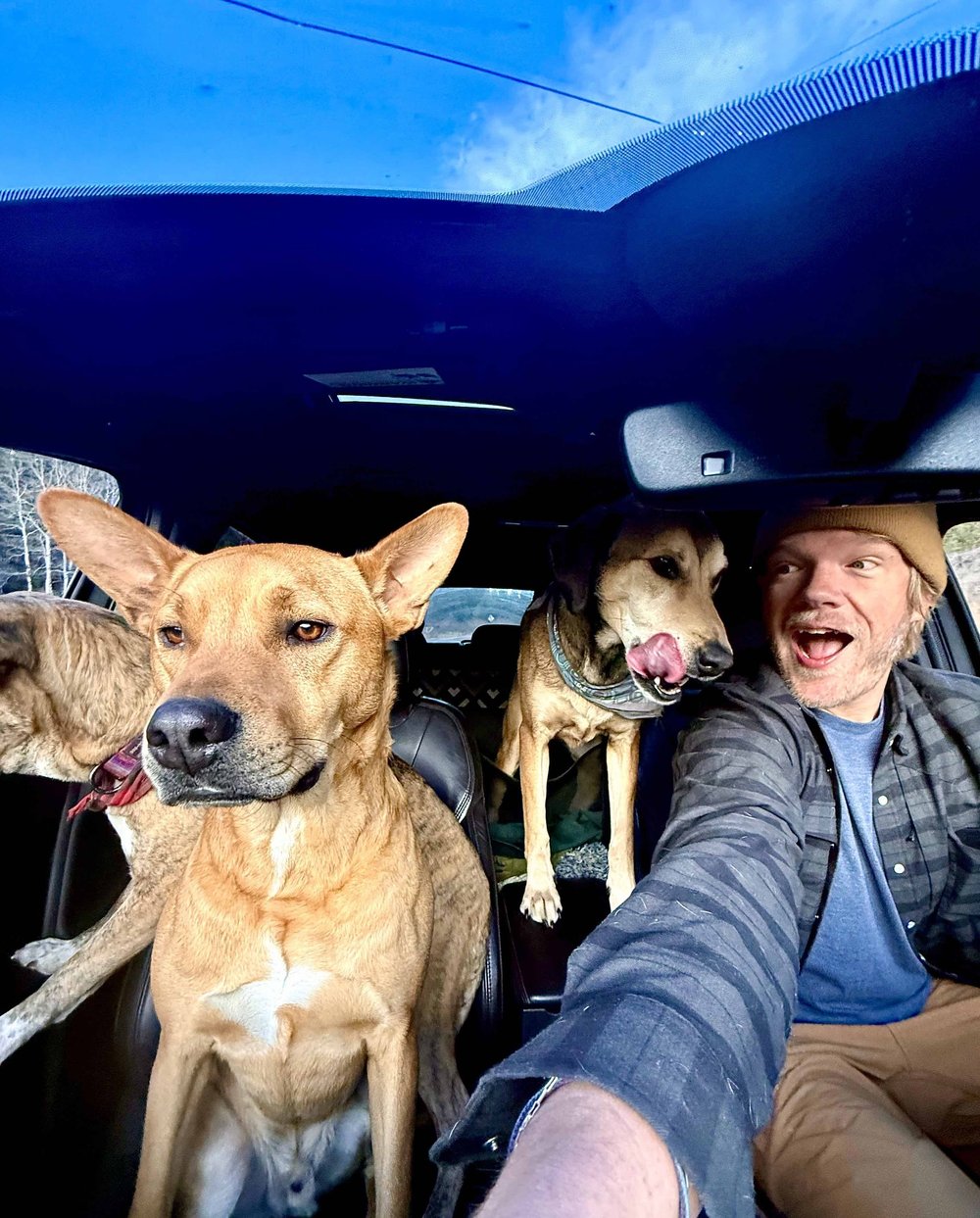
Strategy matters. So do the flyer, the field team, the follow-up text, the customer experience, and whether any of it actually makes money.
15+ years
Building brands
90K → 2.5M
Audience growth
50+
People trained
50+
Trade shows
5 figures
HCH monthly revenue
Selected work / Design, community, business
From the first flyer
to the whole business.
The work has taken different forms. The job is making the idea clear, giving people a reason to care, and carrying it through into something that works.

Graphic design + community
Made to leave the shop.
I made the flyers and spoke cards, screen-printed the shirts, found sponsors, and organized the races. Street Kings Bicycle Congregation brought design, production, and a real community together.
Explore the bicycle-club archive ↗ Brand / Experience / Operations
Hi Country Hounds
A brand you can join.
I built the identity, website, service model, membership experience, communications, and the operating systems behind my own dog-hiking company.
See how the pieces connect ↗Marketing + creative production
Build the audience.
Do the work.
I led strategy, voice, publishing, community, campaigns, photography, and video across a portfolio of consumer brands, alongside field teams and retail programs.
Explore the experience behind it ↗Featured work / Founder + operator / Evergreen
Hi Country Hounds.
Built on the trail.
A dog-hiking business grew into a membership club, a daily service, and a customer experience that continues between outings.
I started with dogs to pick up, routes to organize, and households to keep informed. Trail Club and the operating tools grew out of solving that work, one problem at a time. Eventually there were simply too many dogs for one person to hike.
HCH has been named Evergreen's Best of the Best in Dog Services. The work stays personal: knowing the dogs, earning the households' trust, and supporting the guides.
Explore Hi Country HoundsLoading shared HCH pack totals…
01 / Make the promise clear
The brand.
Identity, design, website, photography, voice, and a service people understand. The creative belongs to the same experience as the hike.
02 / Make it work in the field
The operation.
Profiles, schedules, guides, dispatch, trail records, membership credits, and reporting. I build around the actual work and keep testing and improving the connections.
03 / Give people something to belong to
The club.
Trail Club and Trail Tracker connect the service to adventures, miles, friendships, and achievements. Each outing becomes part of a history the household can follow.
The experience around the hike
- Know the dogs.Profiles and household details give the day its context.
- Organize the outing.Schedules, crews, and guides bring the plan into the field.
- Keep people connected.Dispatch and trail updates help households follow the adventure.
- Carry the history forward.Records, miles, credits, and milestones become part of the next experience.
The story / One way of working
I have been building movements disguised as businesses.
The work has always involved more than the message. A flyer needs an event worth showing up for. A retail campaign needs people behind the counter who believe in it. A membership needs an experience worth coming back to.
I learned that connection in the family sign shops, carried it into a bicycle community, and applied it across marketing, live events, and my own business.
The family sign shops / Austin to Denver
I understood design and marketing before I could read.
My dad, Mance, saw what the Gerber Signmaker 1 could become and bought one. My mom, Donna, turned that opportunity into an operation. Together, they built and named Signs Now.
Readability is the job.
A customer at the counter could look at the wall of letter sizes and understand what would read from a distance. Typography, scale, color, and materials were part of daily life. I learned design by watching it become signs, windows, banners, and lettered vehicles, then helping make the work myself.
If it does not communicate at a glance, it does not work.
The lesson Donna taught me
The wall of logos.
The front room was covered in logos. Behind a glass divider sat the production table, rolls of vinyl, and the people turning ideas into finished work. Artists, designers, screen printers, and graffiti writers brought their own eye to the shops. That was the environment I grew up in.
The family shops, the people, and how I learned to see
The Gerber Signmaker 1 was one of the first computerized signmaking systems. Mance saw what it could become, bought one, and he and Donna put it to work from a van, driving around Austin asking business owners if they needed signs. There was no real monitor. Lettering went through a tiny display, and every typeface lived on its own physical cartridge. It looked less like a design studio and more like someone was trying to run a business with a Super Nintendo.
They named the business Signs Now. After moving to Colorado, they opened three retail shops around Denver and put signmaking where ordinary business owners could walk in, see the work being made, and order it at the counter.
The smell of vinyl is my childhood.
I was born on Friday, August 8, 1986. By Monday, I was in one of their shops.
Donna was the glue. She was a full-time mom raising both of us while running two businesses, managing the shops, employees, customers, payroll, and everything in between. She made the whole thing work and always made sure her people were paid first. She taught me the rule I still apply to signs, websites, content, and entire customer experiences: if it does not communicate at a glance, it does not work.
At home, Mance had a full machine shop in our basement. He designed precision air rifles for field-target competition, including developing the Beeman/FWB P70 FT. There were vinyl cutters at work, mills and metal at home, and almost always something being figured out by making it.
The front room was covered in logos. Behind a glass divider sat the production table, rolls of vinyl, and the people turning ideas into signs, windows, and lettered vehicles. Along the back wall, letters grew from one inch to twenty-four. A customer could stand at the counter and see exactly how large a message needed to be from that distance. It was typography, scale, and readability without the presentation.
The shops attracted artists, designers, screen printers, graffiti writers, and wonderfully strange creative people. A lot of them understood letterforms at city scale, then carried that eye into fine art and design. Brandon B., one of the artists who worked with my mom, taught me production skills and something bigger: how to see. Afternoons with him meant art, politics, Radio 1190, strange ideas, and artists like Banksy long before that name escaped the art world. He showed me that art could matter without acting precious about itself.
My childhood picture books were CorelDRAW clip-art catalogs, Pantone guides, and CMYK swatches. I learned to weed vinyl, burn through transfer tape, mark surfaces with Stabilo pencils, and handle an X-Acto knife much earlier than anyone would recommend. By high school, I was lettering vehicles, making banners, cutting yard signs, and doing whatever the shop needed.
Before the bicycle club, I managed a metaphysical shop and later one of Denver's early dispensaries. I built websites, newsletters, and MySpace pages before "social media manager" sounded like a real job. The tools changed. The shop lesson did not.
SKBC was about bringing people together. I didn’t think of it as building a brand. I was organizing races, making flyers, and helping a community take shape.
Chapter 01 / Denver, Colorado
Before the algorithms, there were alleycats.
Street Kings Bicycle Congregation grew into a Denver community built around races, parties, apparel, art, and the belief that an event should feel like something you were lucky enough to find.
The first club.
I organized underground bicycle races through Denver, including King of Colfax, poker runs, alley cats, and formats that gave serious couriers, road racers, and regular people a legitimate shot at winning.
I made the flyers and spoke cards, screen-printed shirts, tracked down sponsors, helped produce films, organized the routes, and put every dollar back into the prize pool. Our biggest races drew 40 to 60 riders.
Kevin M. came to one of those races, saw what I was building, and recommended me to Dale M. That introduction changed the direction of my life.


Chapter 02 / 2012-2022
There wasn't a playbook. So I made one.
I started as the first field representative for a fast-growing consumer brand. They sent me into stores alone with a handful of products. Over the next decade, the work grew into national field programs, team training, and social marketing.
Win the counter.
I learned what made store employees care, then helped create the carpets, mats, signs, displays, apparel, and merchandise that turned shops into visible brand territory.
Make real fans.
The people behind the counter wore the brand, talked about it, and recommended it. We repeated that process thousands of times across roughly 25 cities.
Build the team.
I created the paid ambassador program, trained roughly 50 people across North America, and managed an active team of approximately 15 to 18 at a time.
Scale the signal.
I moved from the store counter into social and marketing leadership across a large portfolio of in-house brands.
Selected experience
Content was one tool. I used all of them.
Make it clear.
Then make it real.
My foundation is typography, layout, color, and production. I work in Adobe Illustrator and carry ideas into identities, flyers, signs, apparel, print pieces, and digital experiences.
I learned to think about the material, the viewing distance, and the person who has to make or use the finished piece. That is still part of how I judge a design.
Audience at scale.
I owned strategy, voice, publishing, community, campaign development, reporting, photography, and video across a large portfolio of in-house brands. My specialties are short-form video and photography that feel native to the audience instead of assembled in a conference room.
- 90K to 2.5M followers in five years
- Approximately 15M weekly impressions at peak
- Did marketing for both of the largest lighter brands in the US. Apparently I had a specialty.
- Directed retail sampling across roughly 200 stores every week
Make the booth impossible to ignore.
I have worked more than 50 trade shows across nearly every major US city, in industries ranging from cannabis and automotive to technology, manufacturing, pet products, and several things nobody expects to see in the same resume.
- Booth concepts, teams, content, and live execution
- Managed crews of up to 20 people
- Produced booth content for companies including Microsoft and Dialpad
- Spent four years leading social inside an experiential events agency
Some assignments were less normal.
I organized a full Wiz Khalifa signing in Denver, taught Jason Mewes how to use social platforms to support his Twitch audience, originated relationships with artists and filmmakers, helped build and dress sets and retail environments, and appeared as a credited extra in Jay and Silent Bob Reboot.
That work also put me directly with artists including Run the Jewels, 311, UB40, Slightly Stoopid, Rebelution, MEUTE, Kottonmouth Kings, and the Trailer Park Boys.
The names are fun. The useful part is knowing how to find an opening, make an authentic connection, and turn a strange opportunity into something valuable for everyone involved.
Calm when it gets ugly.
I have handled major public-relations problems, coordinated with legal counsel, and managed attacks against highly visible brands.
When a multimillion-follower Instagram account was hacked and sold, I led the investigation, built the identity trail, coordinated with legal counsel, and helped recover it.
I built it myself. I didn't learn it alone.
Dale M. saw potential in a bike-race organizer and trusted me with progressively bigger opportunities and harder problems. His mentorship helped turn instinct into a career, and eventually into the confidence to build something entirely my own.
How I work / Across the whole experience
Strategy is better when somebody can actually build it.
I work best when I can understand both sides of the customer experience: what people see, and what the business has to do to deliver it.
Graphic design + brand identity
Typography, layout, vector artwork in Adobe Illustrator, identity, signs, apparel, print, and digital applications. Designed with the finished use in mind.
Marketing + community
Positioning, audience, voice, campaigns, offers, launches, social strategy, and the reasons people join and stay.
Photography + video
Photography, short-form video, campaign content, and creative production shaped for the people who will actually see it.
Events + field teams
Trade shows, retail advocacy, ambassador programs, booth experiences, staffing, training, and live execution.
Business operations + systems
Customer journeys, scheduling, communications, memberships, data, reporting, and the experience clients and staff use every day.
Casey Etheredge / Evergreen, Colorado
Want to compare notes?
If you are researching my work, thinking through a business, or have a project you want to talk about, send me a note. Tell me what exists and what you are trying to make happen.
Start a conversation